
How Leaders Can Step Up When HR Is Overworked?
Author:
Date: 01-12-2025
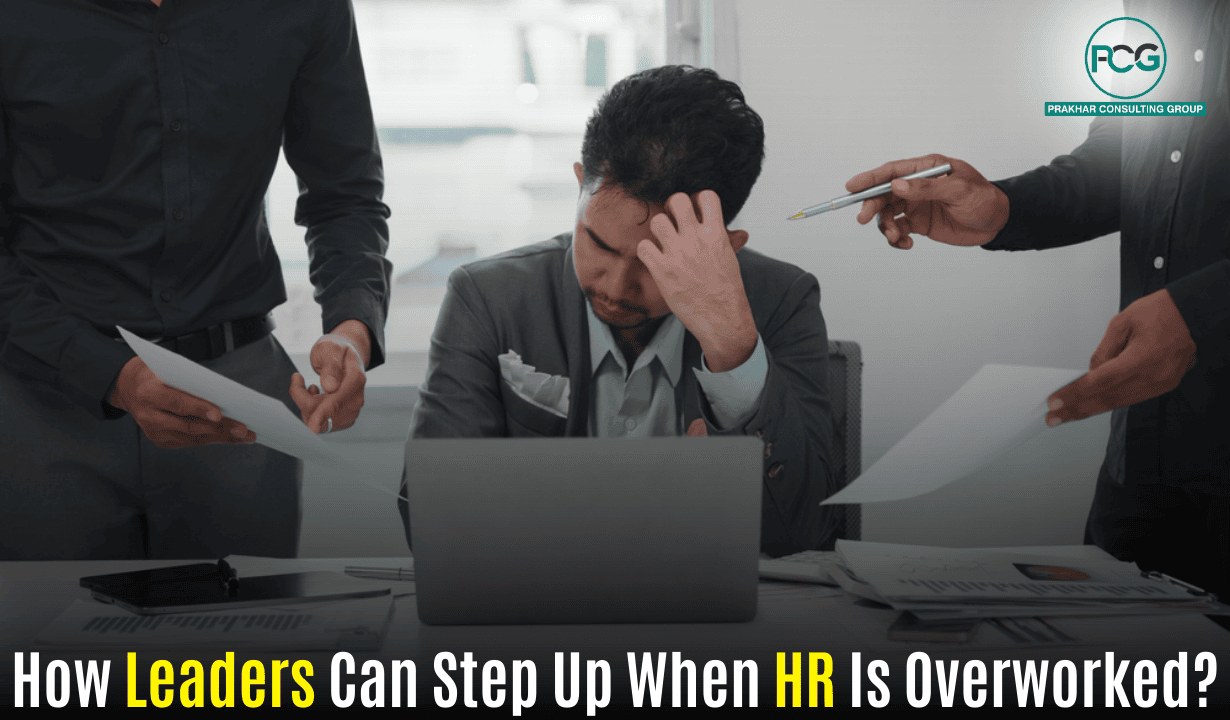
When HR teams are overworked, organisations feel the impact instantly: slow hiring, delayed employee responses, compliance risks, and rising burnout across departments.
Leaders often ask a simple but urgent question: “How do I lead effectively when my HR team is drowning in workload?”
The truth is that overworked HR teams aren’t just stressed; they signal deeper systemic issues that require leadership intervention, not just temporary fixes.
HR overload is a structural problem that leaders must solve with clarity, empathy, and operational redesign. In many Indian organisations, executives turn to a Top Permanent Staffing Company in India for immediate relief.
But sustainable capacity comes from leadership that actively protects HR from operational chaos.
Why HR Burnout Happens (And What Leaders Miss)?
HR burnout is a state of cognitive and emotional overload caused by prolonged administrative and operational pressure. Also, it is driven by workload imbalance, reactive workflows, and unrealistic role expectations.
Major employers such as TATA, Infosys, and Larsen & Toubro have publicly highlighted how HR workload increases faster than headcount growth.
Most companies overlook that burnout usually begins long before HR reports it. Most leaders think HR needs automation first, but data shows they actually need bandwidth and decision clarity before tools.
- 2024 industry surveys show 52% of HR teams manage 1.5–2× their recommended workload.
- Employee queries and tickets increased 29% due to hybrid work.
- 41% of escalations occur because managers rely on HR for basic decisions.
It is also the fact that many organisations are in deep search of Senior Leadership Hiring Services to strengthen managerial roles and redistribute responsibilities. Are you looking for such services? If the answer is yes, you can contact the Prakhar Consulting Group team who are ready to help you.
How Cross-Functional Ownership Protects Overworked HR Teams?
Cross-functional ownership prevents HR from becoming the single point of failure for all employee and compliance issues. Industries such as BFSI, Pharma, and Manufacturing have adopted “distributed people operations,” where managers share responsibility for routine HR tasks.
Companies like Unilever, Siemens, and Havells use these structured models effectively. Experts consider this a turning point in the way companies view PeopleOps.
Eye opening insights:
Most leaders assume HR should solve every people-related issue, but data shows front-line managers handle 48% of queries faster.
- 2024 workforce analysis shows shared ownership reduces escalation volume by 32%.
- Manager-driven onboarding reduces HR dependency by 22%.
- 68% of routine employee concerns can be resolved at team-lead level.
How Leaders Can Reduce Workload Pressure Immediately?
Leaders reduce HR overload by reallocating tasks, enforcing workload priorities, and eliminating approval bottlenecks. According to 2024 reports, documentation, onboarding follow-ups, and payroll clarifications consume 45-55% of HR time; more than recruitment itself.
A leadership behaviour many companies miss:
Most organisations assume hiring drives HR pressure, but administrative tasks account for the majority of overload.
Digital platforms like Darwinbox, SAP SuccessFactors, and Zoho People can reduce manual dependency significantly. During peak hiring months, leaders often collaborate with a Manpower Consultancy in India to balance the recruitment load.
- A 2025 trend analysis shows that micro-automation reduces HR workload by 38%.
- Here’s what the numbers reveal: self-service portals lower ticket volume by 26%.
- Workflow automation increases HR output equivalent to 1.6 FTEs.
Can Leaders Strengthen HR Through Communication & Strategy?
Yes! Leaders strengthen HR by acknowledging workload pressure, enabling transparency, and removing cultural barriers.
Companies like Accenture, Capgemini, and HCL have repeatedly emphasised that psychological safety is a core requirement for PeopleOps stability.
Most companies overlook that HR rarely expresses their own stress because they’re expected to be “emotionally strong.”
Conclusion
When HR is overworked, leaders must shift from oversight to architecture; redesigning processes, redistributing ownership, and creating systems that protect HR capacity. The future of organisational stability depends on leaders who understand that HR strength is a strategic asset, not an operational expense. Great workplaces are not built by HR alone; they are built by leaders who remove friction, empower teams, and prioritise human sustainability.
FAQs
1. What causes HR teams to become overworked?
HR overload comes from high hiring volume, admin-heavy tasks, unclear workflows, and lack of cross-functional ownership.
2. How can leaders quickly support overworked HR teams?
Leaders can reassign tasks, prioritise workloads, remove approval bottlenecks, and outsource recruitment temporarily.
3. Why does HR burnout impact business performance?
Burnout slows hiring, increases errors, reduces engagement, and delays strategic initiatives like L&D and workforce planning.
4. What tools help reduce HR workload?
Platforms like SAP SuccessFactors, Darwinbox, and Zoho People automate documentation, onboarding, and employee queries.
5. What is the long-term fix for HR overload?
Redesigning workflows, adopting automation, strengthening manager-level ownership, and partnering with external staffing firms in India.